

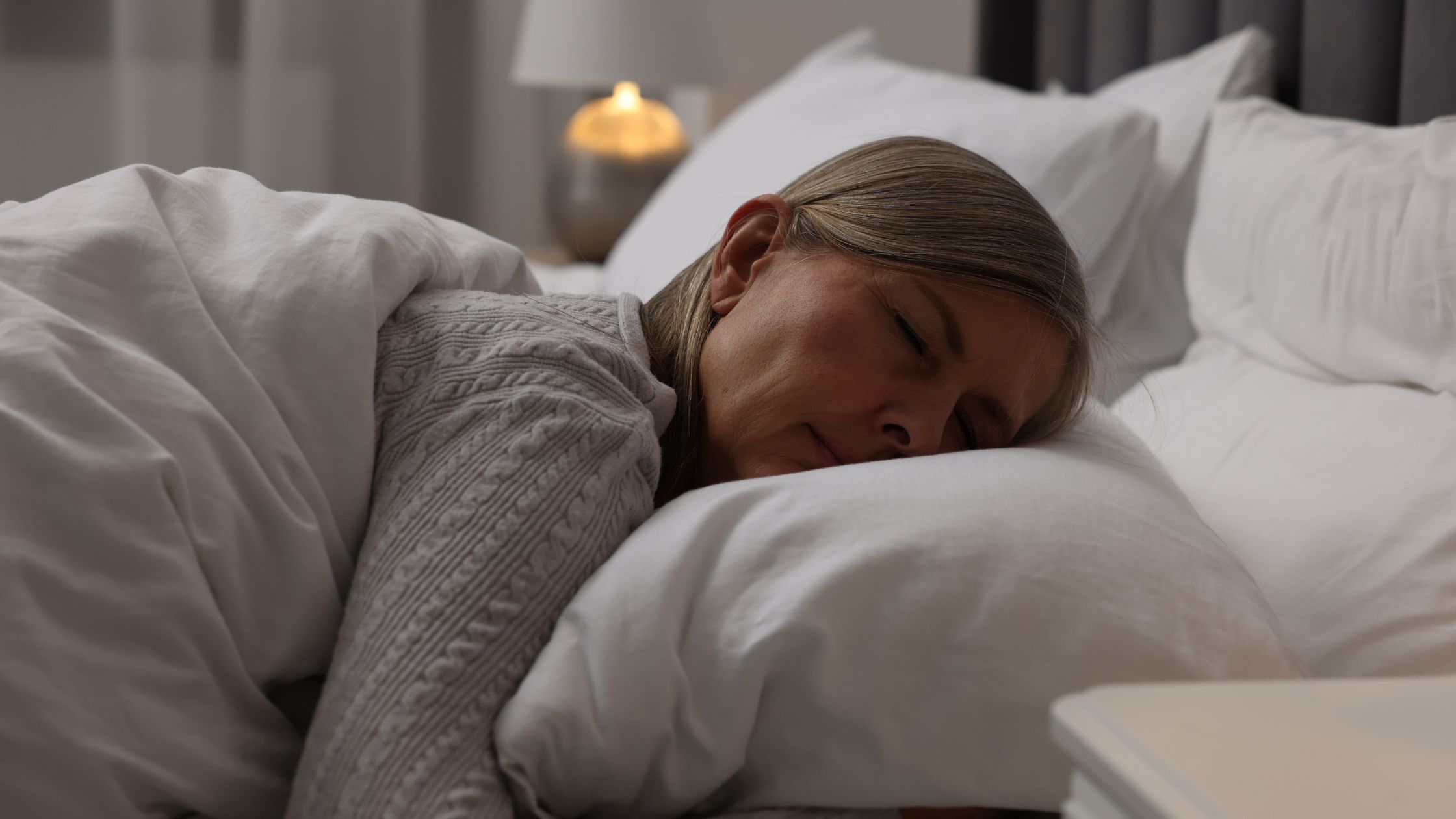
“I’ve never had trouble sleeping before. What changed?”
As a sleep physician, this is a question I hear frequently from women in midlife.
Maybe you’re exhausted when you get into bed, but suddenly wide awake.
Or you fall asleep easily and then find yourself staring at the clock at 3 a.m.
Maybe you’re waking up drenched in sweat. Maybe your mind won’t turn off. Or perhaps you’re getting what looks like eight hours of sleep but still waking up feeling as though you barely slept.
If this sounds familiar, you’re not imagining it.
Sleep can change during perimenopause and menopause.
And understanding why matters, because menopause may be part of the story without necessarily being the whole story.
Hormonal Changes Can Affect Sleep in More Ways Than One
Sleep is not separate from the rest of your physiology.
During perimenopause and menopause, changing ovarian hormones can affect temperature regulation, mood, and sleep. Hot flashes and night sweats can repeatedly interrupt sleep. Stress, mood changes, and the frustration that develops after night after night of poor sleep can make it even harder to settle back down.
You may begin noticing:
- Difficulty falling asleep
- Frequent nighttime awakenings
- Waking earlier than you want
- Night sweats
- Feeling unrefreshed in the morning
- Daytime fatigue or sleepiness
- Difficulty concentrating
- Changes in mood
And here’s the thing about sleep: once it becomes disrupted, it can start to reinforce itself.
You sleep poorly. You’re exhausted the next day. Everything feels a little harder. You start worrying about whether you’ll sleep that night. Bedtime comes, and now there’s pressure to make sleep happen.
Poor sleep → daytime fatigue → greater stress → worrying about tonight’s sleep → more difficulty sleeping
That’s how a few difficult nights can sometimes turn into a much longer struggle with sleep.
And poor sleep doesn’t only affect how rested you feel. Sleep is connected to mood, cognitive function, appetite regulation, metabolic health, cardiovascular health, and our ability to cope with stress.
That’s why I don’t think of sleep as something to address only after everything else has been handled.
Sleep is part of your health.
Not Every Sleep Problem in Menopause Is Caused by Hormones
Obstructive sleep apnea becomes more common in women during and after the menopausal transition. And sleep apnea in women doesn’t always look like the stereotypical picture of loud snoring and obvious daytime sleepiness.
Sometimes what brings a woman into my office is insomnia.
Or persistent fatigue. Unrefreshing sleep. Morning headaches. Difficulty concentrating. Mood changes. Frequent awakenings.
There can be a lot of overlap between symptoms we associate with menopause and symptoms of an underlying sleep disorder.
Chronic insomnia can also develop during this stage of life. Restless legs, medications, mood disorders, medical conditions, pain, and circadian changes can contribute to disrupted sleep too.
So if you’re consistently exhausted despite giving yourself enough opportunity to sleep, or your sleep has changed significantly, don’t automatically assume this is simply something you have to accept because you’re getting older.
It’s worth asking why.
What Helps Depends on What Is Disrupting Your Sleep
This is where individualized care matters.
If hot flashes are waking you repeatedly, treating the vasomotor symptoms may be an important part of improving your sleep.
If obstructive sleep apnea is contributing, no amount of perfect sleep hygiene is going to treat the underlying breathing disorder.
And if chronic insomnia has developed, simply telling yourself to relax or go to bed earlier usually isn’t the answer either.
Start by Supporting Your Natural Sleep Rhythms
Keep a consistent wake time
Your wake time provides an important signal for your circadian system. Keeping it relatively consistent can help anchor your sleep-wake rhythm.
Get morning light
Morning light is another important signal for your circadian clock. Getting outside after waking can help reinforce your body’s timing for alertness during the day and sleep at night.
Create a sleep-supportive environment
A bedroom that is cool, dark, and quiet can be particularly helpful when night sweats are part of the picture.
Pay attention to caffeine and alcohol
Both can interfere with sleep for some people, especially when consumed later in the day.
Give your mind and body time to wind down
Your brain and body don’t always go directly from a stressful, demanding day into sleep.
A few minutes of slow breathing, mindfulness, guided imagery, journaling, or simply doing something quiet can help create some space between the demands of the day and bedtime.
Not because you need the perfect bedtime routine.
Sometimes your mind and body simply need a little time to shift gears.
Chronic Insomnia Needs More Than Better “Sleep Hygiene”
If you’ve been struggling with insomnia for months, please don’t assume you just haven’t found the right nighttime routine.
Cognitive Behavioral Therapy for Insomnia, or CBT-I, is the first-line behavioral treatment for chronic insomnia. It goes much further than sleep hygiene.
CBT-I helps address the thoughts, behaviors, schedules, and learned patterns that can keep insomnia going long after the original trigger.
That’s an important distinction.
The goal isn’t to force yourself to sleep harder.
It’s to understand what’s interfering with sleep and use evidence-based strategies to help change the patterns that are keeping insomnia going.
Start by Getting Curious About Your Sleep
If you’re not sure what’s affecting your sleep yet, start by paying attention.
When are you going to bed and waking up? Are you waking because you’re hot, uncomfortable, worried, or seemingly for no reason at all? How do you feel during the day? Has anything else changed around the same time your sleep changed?
Think of it as an opportunity to get curious about your sleep rather than critical of it.
You don’t need to do everything perfectly.
You need to understand what you’re working with.
You Don’t Have to Accept Poor Sleep as Part of Midlife
Midlife brings a lot of change, and sleep is only one part of the picture. Movement, nutrition, stress, relationships, physical health, hormonal changes, and sleep all interact.
But being exhausted doesn’t have to become something you simply accept as part of being a woman in midlife.
If your sleep has changed, start by getting curious about why.
If you’d like a structured place to begin, download the Sleep Reset Workbook to take a closer look at your sleep patterns and what may be getting in the way.
And if you’re struggling with sleep during perimenopause or menopause and want help figuring out what may be contributing, schedule a free Meet & Greet with me. I’d love to support you if I can.
If you want to understand what treatment may look like, I wrote a brief guide explaining the current treatment options for menopausal symptoms. Check it out: “Menopause Treatment Options: Hormone Therapy, Non-Hormonal Treatments, and Healthy Aging.”